The Watchmaker: Building a Mechanical Watch in a Database
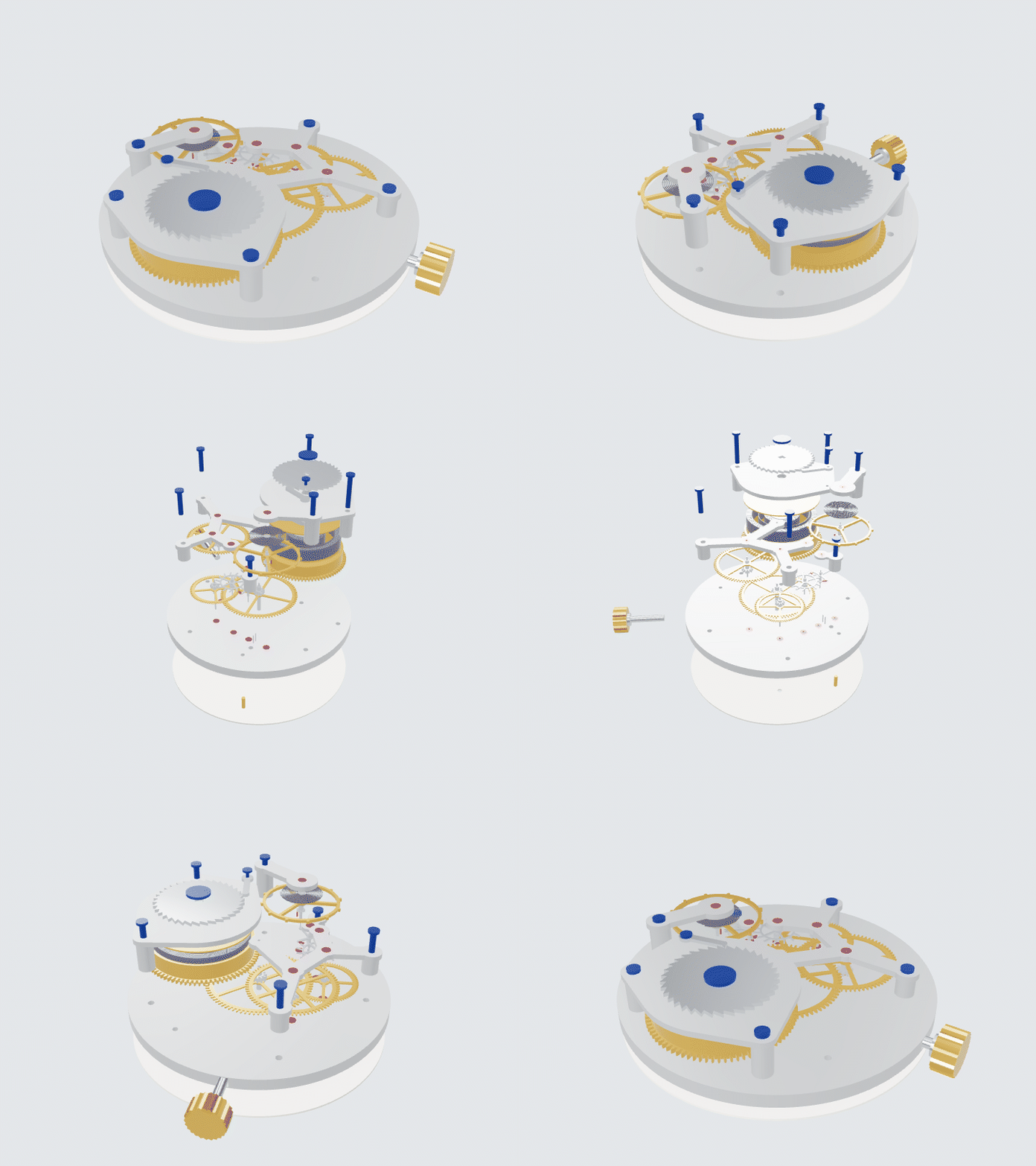 The Complete watch assembly created using SQL Spatial Geometry
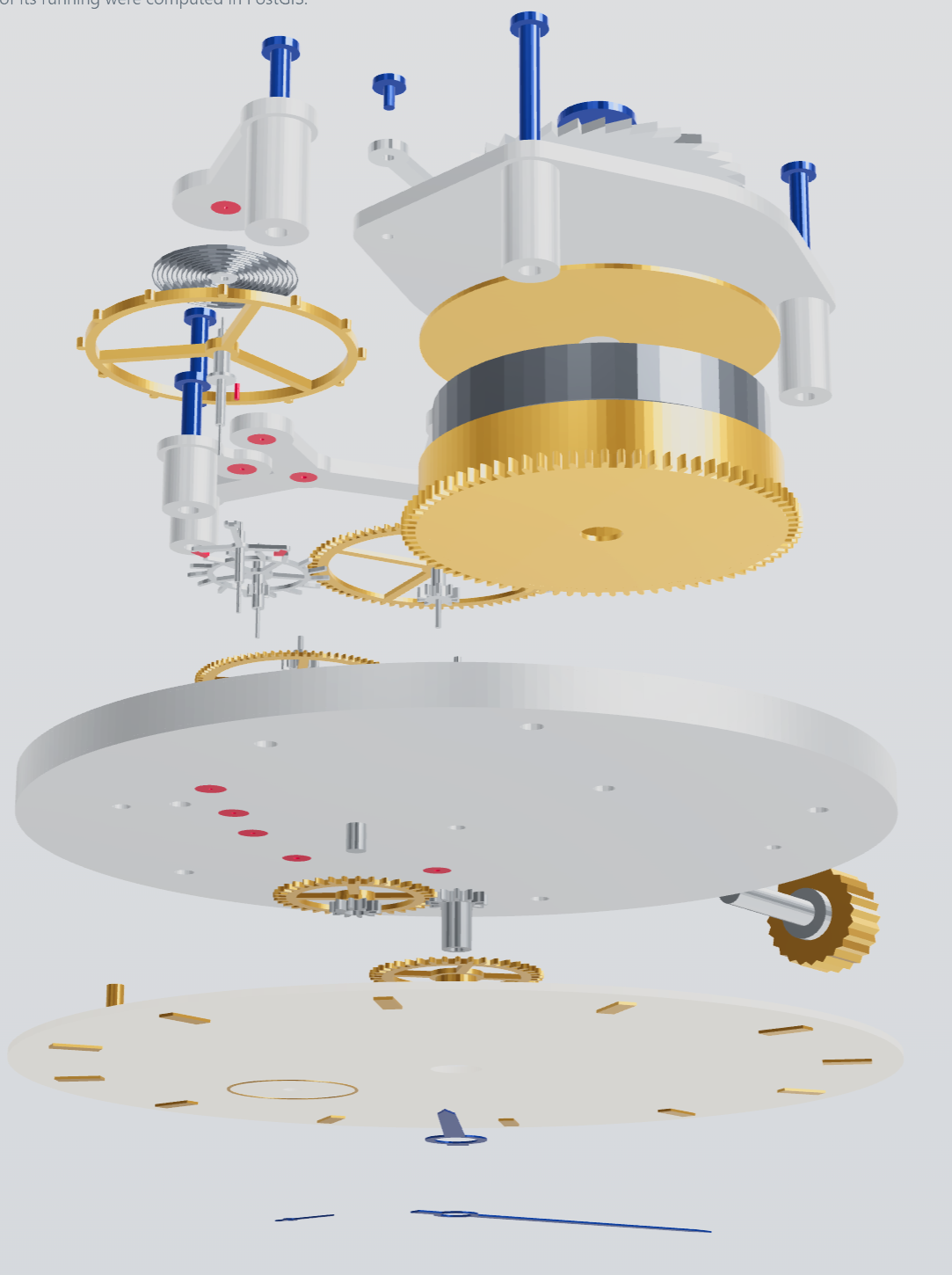 The exploded watch, each part modeled and animated inside a database.
This time next year, we’ll be millionaires
In the 1996 Christmas special of Only Fools and Horses, “Time on Our Hands”, Del Boy and Rodney clear out the garage and find an old watch. It turns out to be a long-lost timepiece by John Harrison, the man who solved longitude. It goes under the hammer for £6.2 million, and after years of trying, the Trotters finally are millionaires.
I have never found a Harrison in my garage. I’ve found a lot of cables.
I have, though, owned around twenty good watches over the years. If you want my honest league table for keeping time, nothing beat the Rolex, with the Omega a close second. Neither is worth £6.2 million, before anyone at home gets ideas.
 Did like that watch, had to sell it when I got very ill
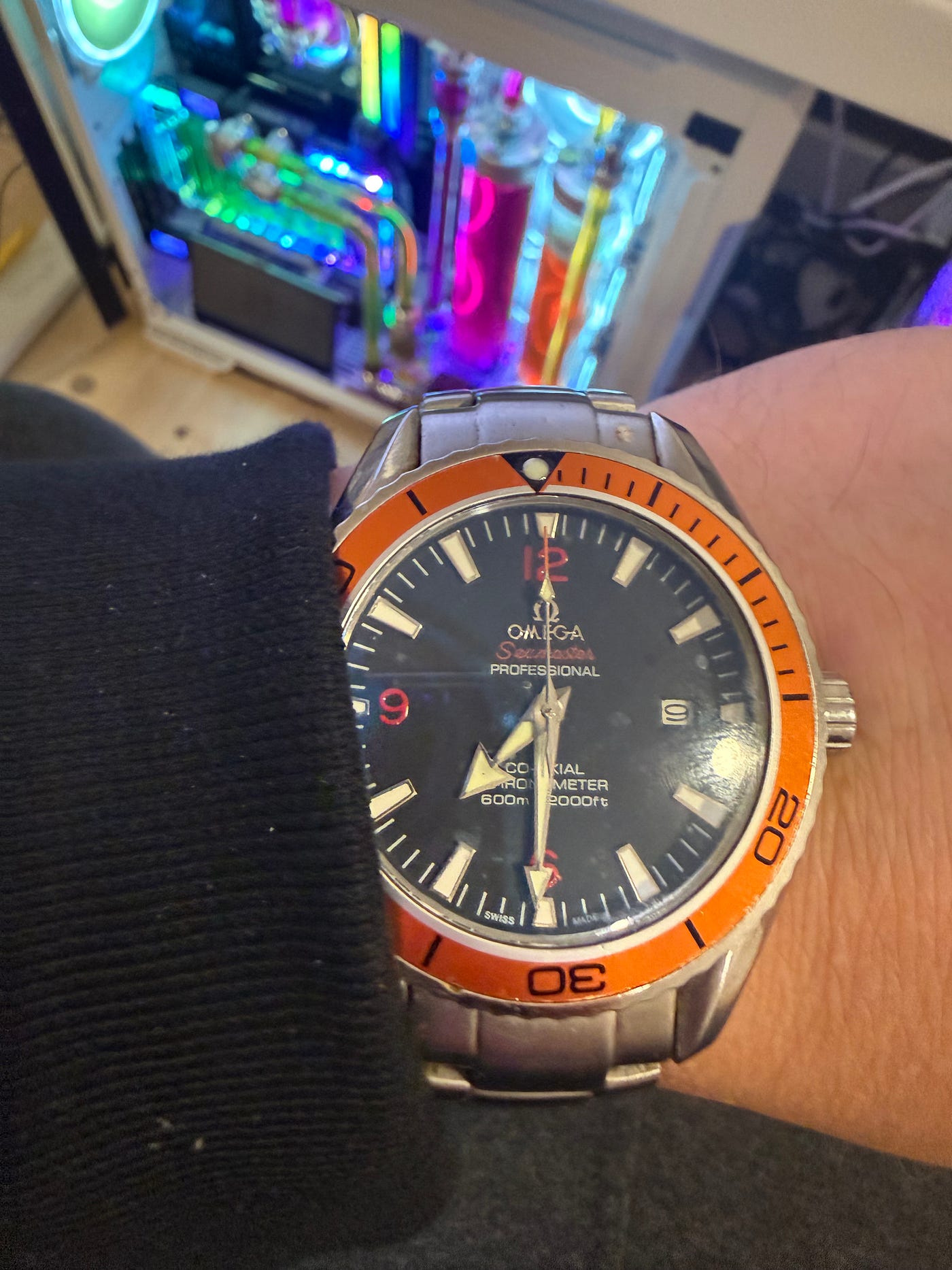 Current timepiece, somewhat spoilt by having 007 on the back.
I have always wanted to build a watch. The trouble is my eyes. Even with a 15× magnifier, I have made models over the years, but recently I have been struggling because my hand starts shaking and I hold my breath so I don’t drop what I’m holding. Anyway, I can still program, so I did the next best thing. I coded one.
The spark was Bartosz Ciechanowski’s Mechanical Watch. If you haven’t seen it, stop reading this and go and look. His first picture is a watch movement you can spin round and pull apart with a slider. I wanted that, but built by a database.
This article was meant to be about SQL Server 2025. It still mostly is. But halfway through I had to pack my bags and move house to PostgreSQL, and I want to explain why. I also want to ask the SQL Server team a straight question.
By the end, a database had designed a 26 mm watch movement of 34 parts, checked that no two parts share space, worked out by itself how to take it apart, and run it for a minute. Every tick was computed in SQL.
Onto the article.
A watch in five minutes
A mechanical watch is a spring that wants to unwind, and a very clever way of letting it unwind slowly. Everything else is detail.
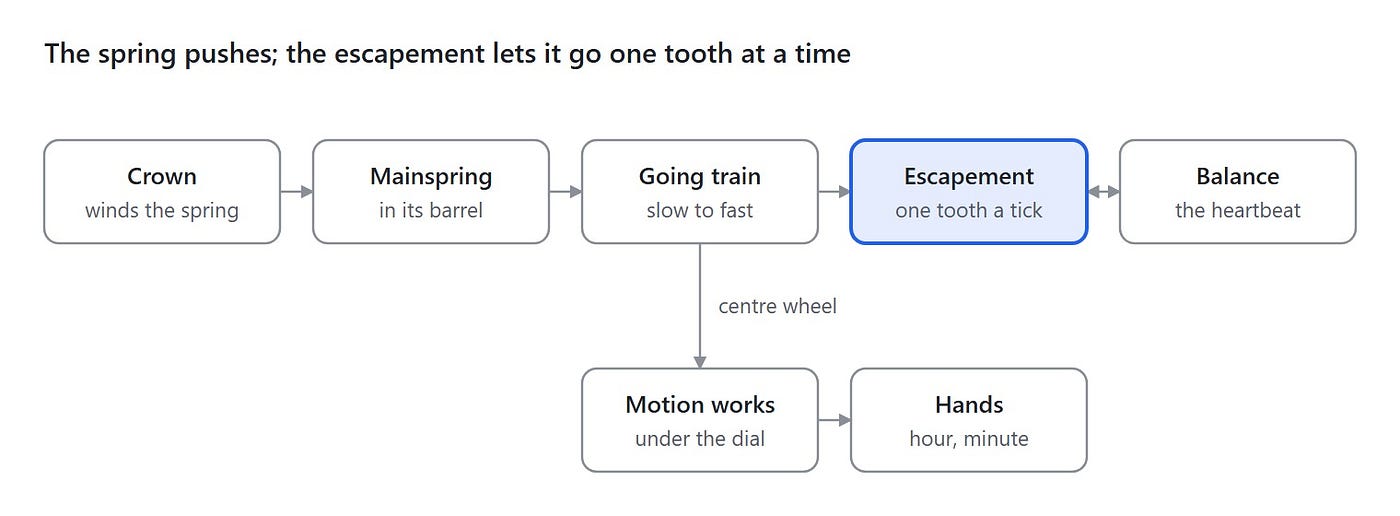
The balance and the escapement work as a pair: each swing lets one tooth go, and each tooth gives the swing a little kick to keep it going.
- Mainspring. A long strip of steel coiled up tight. Winding the crown coils it tighter. It’s what was used before batteries.
- Barrel. The drum the mainspring lives in. The spring turns the drum, and teeth around its edge drive everything else.
- Ratchet and click. A one-way gate on top of the barrel. You can only wind the spring forwards. That’s the clicking you hear when you wind a watch.
- Going train. The gears from the barrel to the escapement. The centre wheel turns once an hour (it carries the minute hand). The fourth wheel turns once a minute (the seconds hand). The third wheel sits between them. Big gears are wheels, little ones are pinions, and a pinion’s teeth are called leaves, because watchmakers.
- Escapement. The clever bit. Left alone, the spring would spin the train round in a second. The escape wheel and the pallet fork let it move one tooth at a time, tick, tock.
- Balance and hairspring. The heartbeat. A little wheel on a spiral spring swings back and forth at a steady rate. Each swing flicks the pallet fork and lets one tooth go. Mine swings 2.5 times a second: 18,000 beats an hour.
- Motion works. Under the dial, a small 12:1 gear set, so the hour hand goes round once while the minute hand goes round twelve times.
- Jewels. Tiny synthetic rubies used as bearings. Less friction, and they don’t wear out.
- Bridges and cock. The plates screwed over the top that hold the wheels in. The one holding the balance is called the cock.
- Keyless works. The crown and stem for winding and setting the time. My watch has the stem and crown, and leaves the rest for another day.
A spring, some gears, a gate and a heartbeat. Simple, until you try to build one.
A little bit of history
The balance and hairspring go back to Christiaan Huygens in 1675. Before that, a watch was lucky to be right to within the hour.
Then came the longitude problem. Ships could work out how far north they were from the sun, but not how far east or west. For that you need to know the time back home, exactly, after weeks at sea. In 1714 the British government offered a fortune for a solution. A Yorkshire carpenter called John Harrison spent most of his life on it, and his sea watch, H4, crossed to Jamaica in 1761 and came back only a few seconds out. That’s the Harrison that Del Boy found in the garage, or near enough.
The escapement in almost every mechanical watch today goes back to Thomas Mudge’s lever escapement from the 1750s. The Swiss refined it in the 1800s into the Swiss lever, and that’s the one I built. Omega’s co-axial escapement, designed by George Daniels, is a famous cousin of it.
What gets me is this. Two hundred and fifty years later, a few hundred bits of metal and a spring still keep time to a few seconds a day, with no electronics at all. That’s what I wanted a database to understand.
The plan: model the metal, not the maths
Every part is a polygon: a gear, a pallet stone, a click. Then I ask one question, over and over: do these two shapes overlap? In SQL Server that’s STIntersects.
Take the escapement. Turn the escape wheel a tenth of a degree, turn the pallet fork a tenth of a degree, and ask: do they overlap? Do that for every combination and you get a map of every position where the parts can be. Store that map once. After that, running the watch is just a search through a table: from where I am, where can I go next?
Nothing in the code says “the ratio is 8” or “the wheel advances 12 degrees a beat”. Those numbers fall out of the shapes. If I get a tooth wrong, the watch jams, just like a real one.
Two rules:
- The database does the physics. Python only draws what the database worked out. It never decides anything.
- Everything gets checked twice. A separate Python copy of every shape and every rule (I call it the mirror) does the same sums with different software.
Part 1: SQL Server 2025, in 2D
I split the watch into four jobs and gave SQL Server one at a time. All four worked, and all four matched the Python mirror.
Episode 1: the escapement
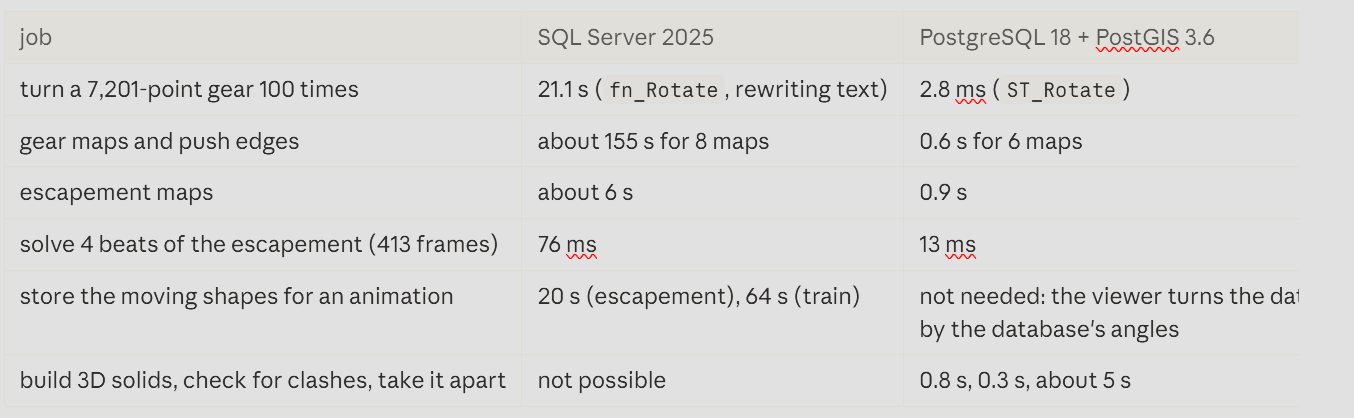
The heartbeat first, because it’s the hardest. SQL Server asked about 97,000 “do these overlap?” questions in about 6 seconds and stored the answers as maps. Then a solver drove the balance back and forth, and the fork and the escape wheel go wherever there are gaps.
What came out was a real escapement. Each beat of the wheel locks on a stone, gets pushed back a fraction (the recoil, −0.2°), gives the fork its kick (the impulse, about 10° of wheel) and then drops onto the other stone. It moves exactly 12° a beat. Nobody told it 12.
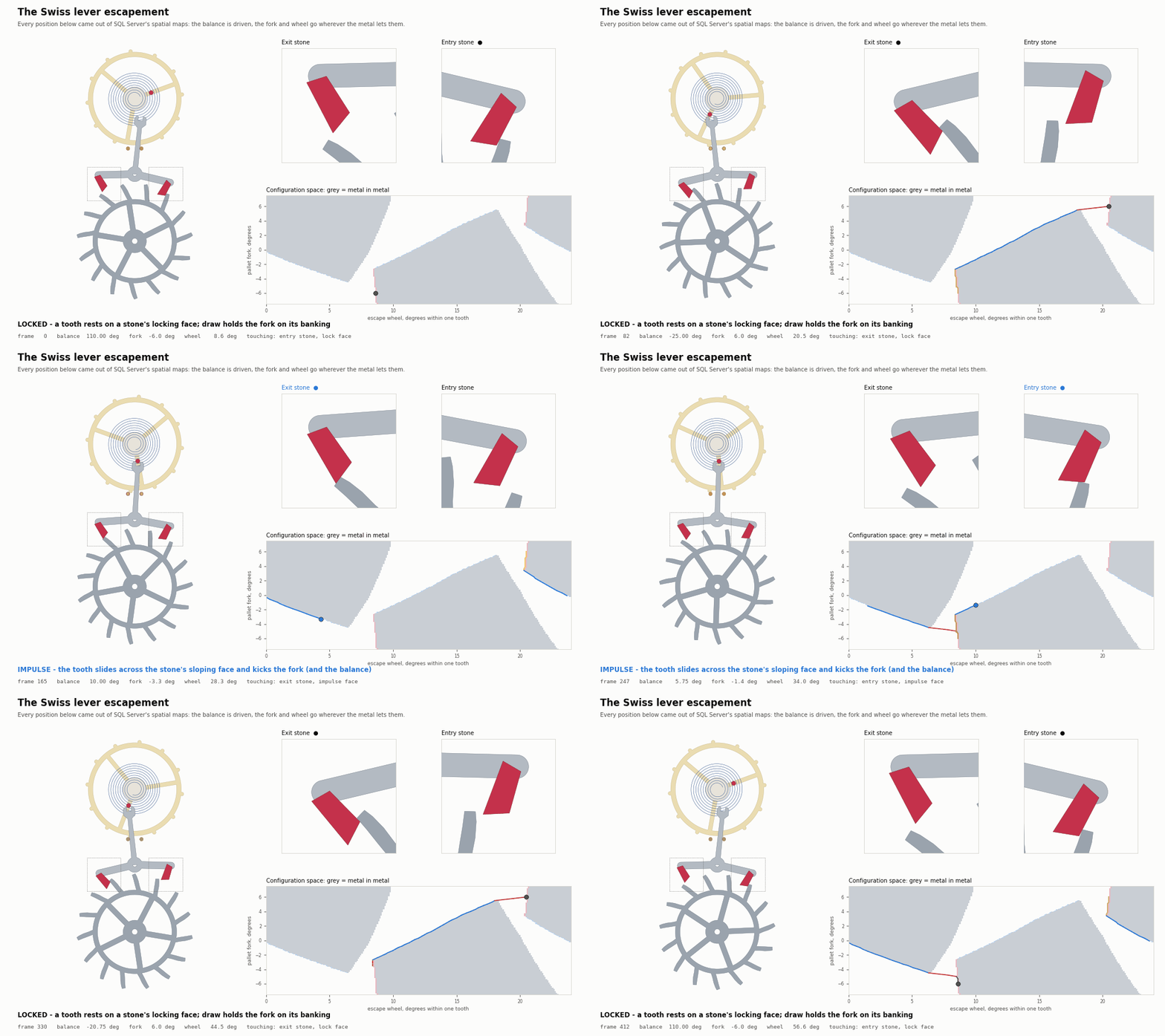 Episode 1: the escapement, every frame worked out by SQL Server Spatial
Episode 2: the going train
Watch teeth are a funny shape for a reason. The sides of a wheel tooth are an epicycloid: the curve traced by a point on a coin rolling round another coin. I built proper ones, and some naive straight-sided ones to compare.
The database turned each wheel, a section at a time, and calculated how far the next pinion had to move to stay clear. From that process, the ratios came out at exactly 8, 7.5 and 10 on average. With the proper teeth, the speed wobbles by a percent or so within each tooth. With straight teeth, it swings by ±32%, and the little 8-leaf escape pinion jams solid. So that’s why watch teeth look like that.
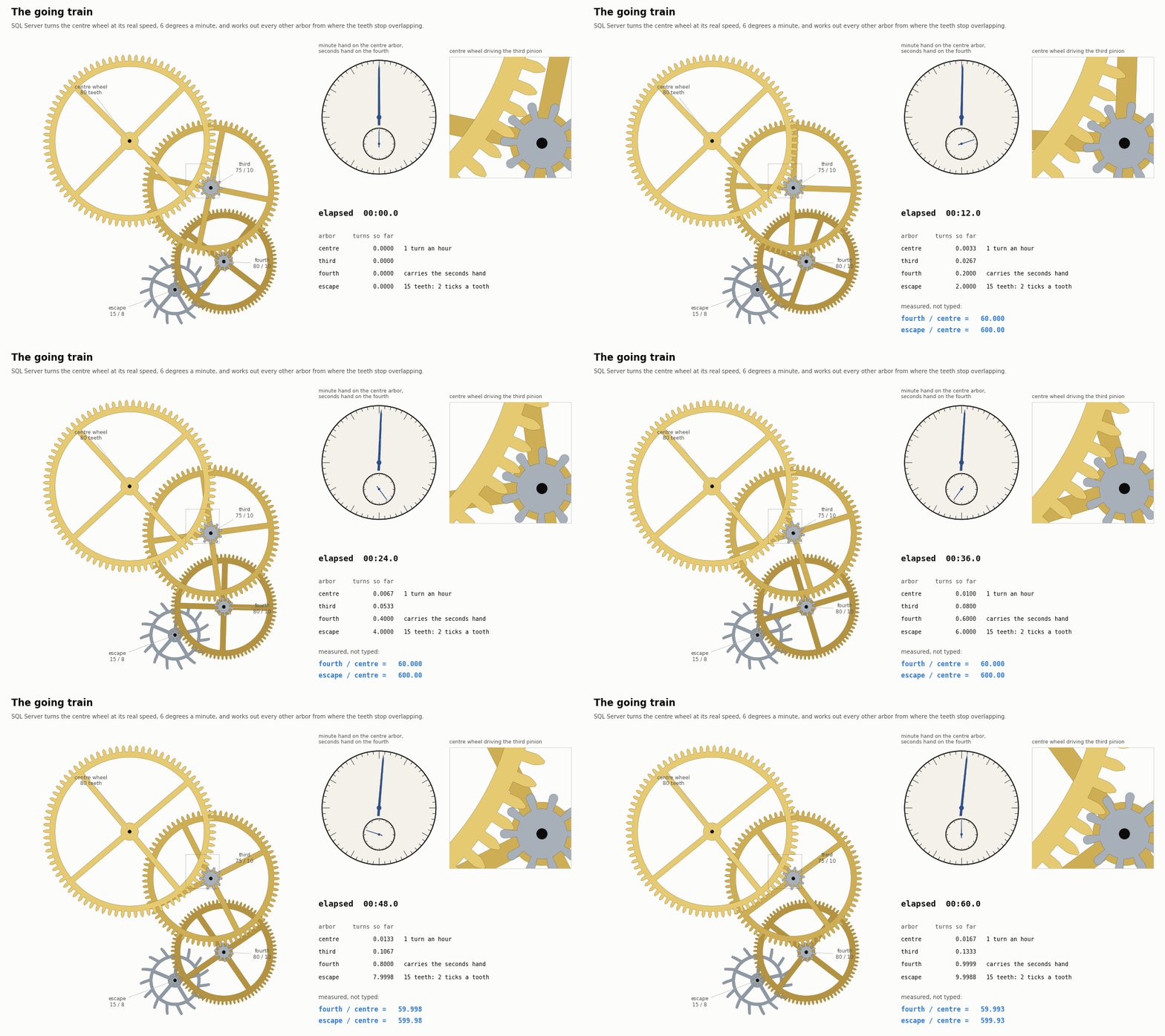 The going train
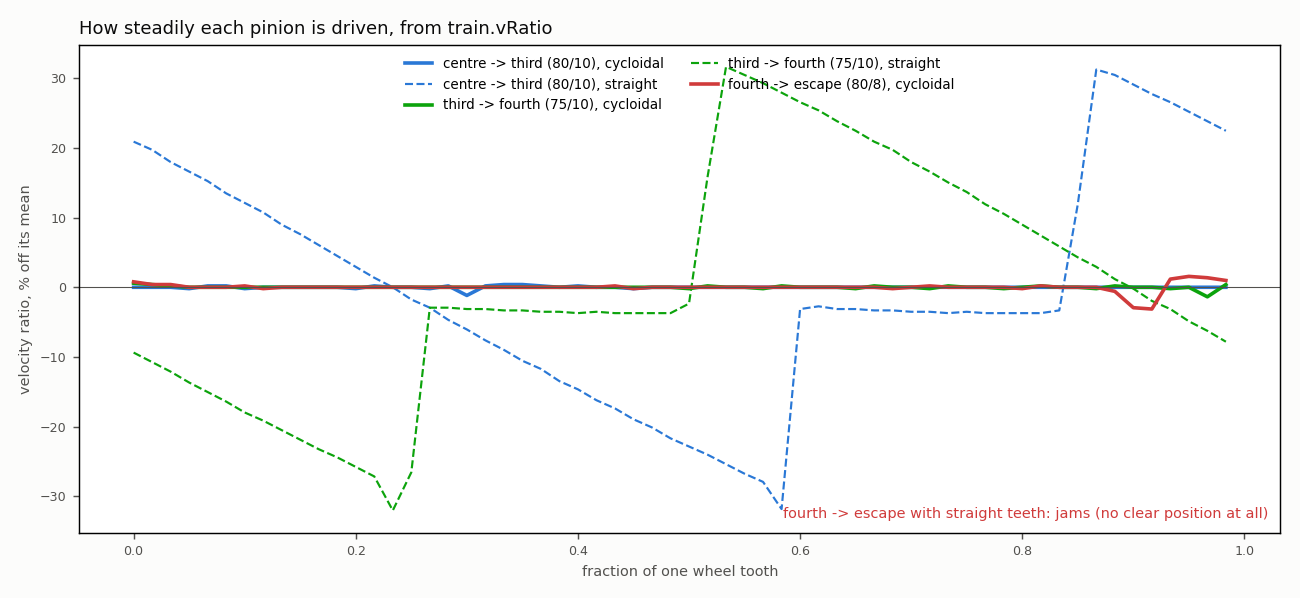 The Train Ratio
Episode 3: power
The click only lets the ratchet turn one way. I never coded “one way” anywhere, because I’m using the shapes; the teeth block the other direction. It clicks 36 times each turn, and if you let go mid-wind, it slips back 10.9° before the ratchet catches.
Watchmakers have an old rule of thumb that a spring works best when it fills about half the barrel. I tried springs of every length, and found the best one filled 49.6%. The spring gives 6.36 turns of the barrel, which is about 51 hours of running.
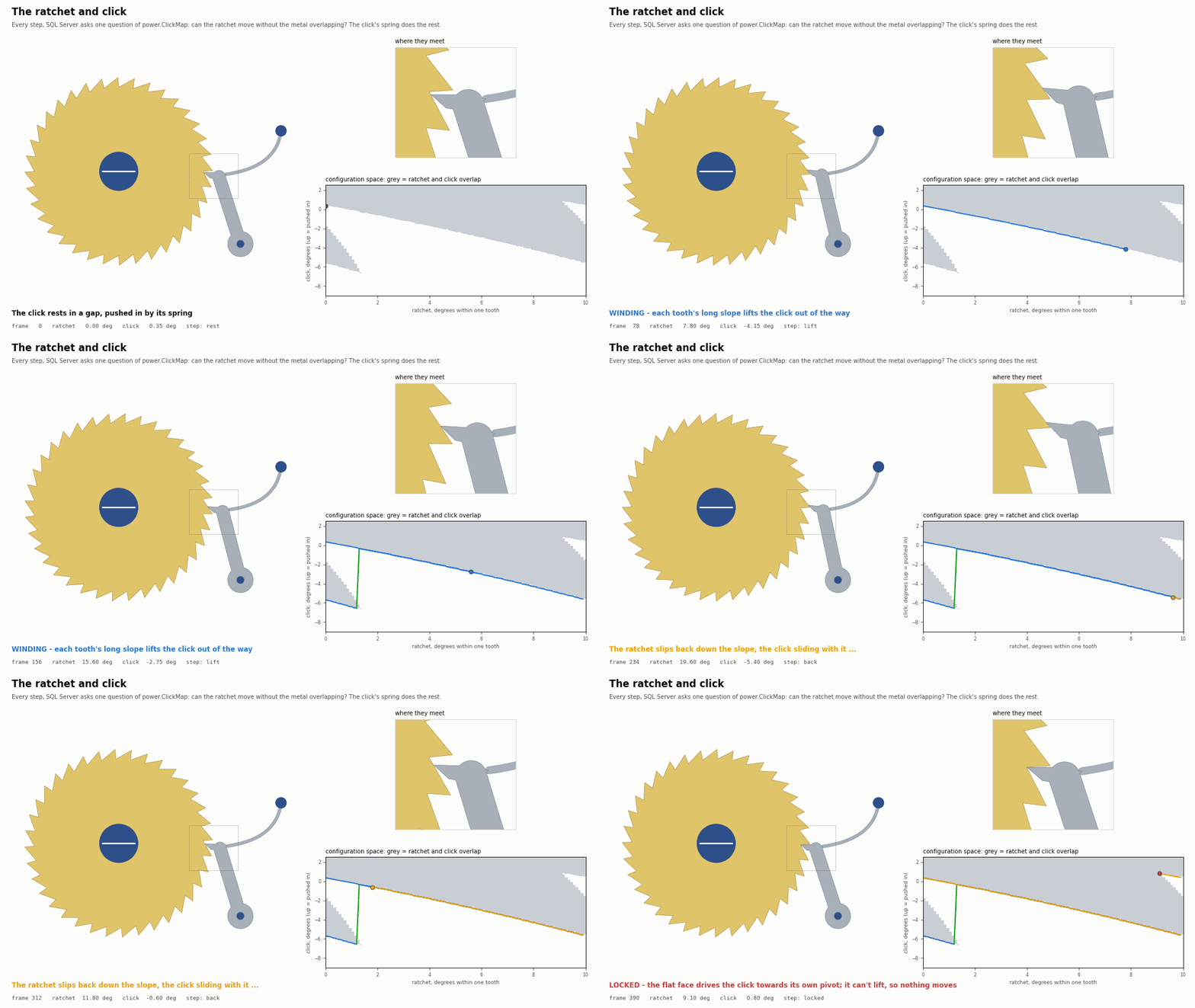 Power — ratchet and click
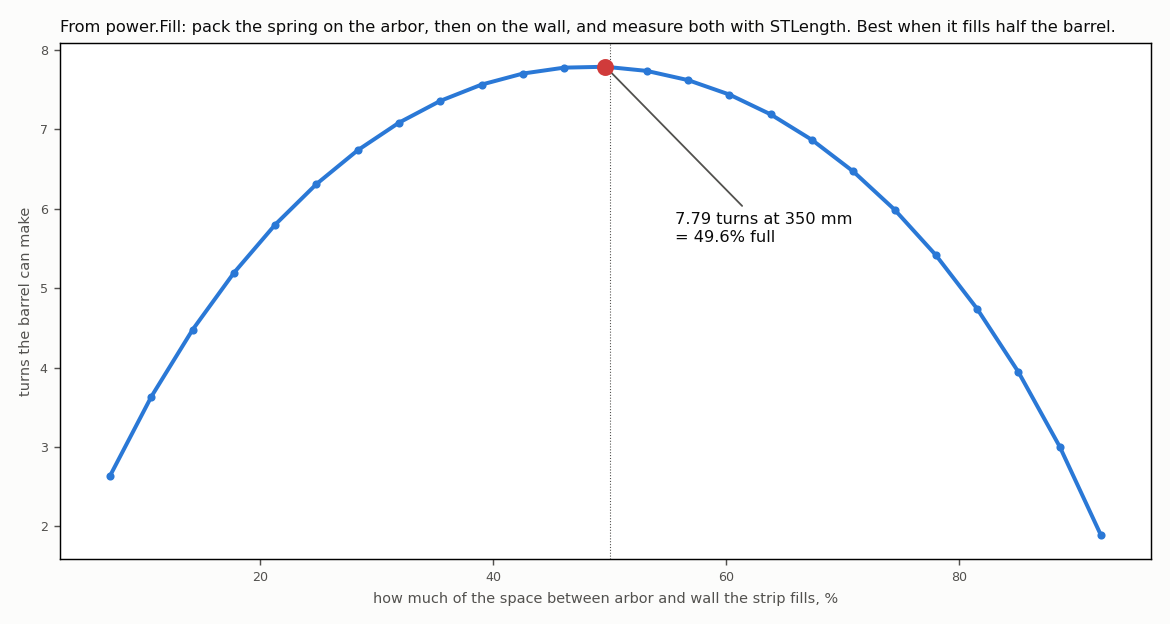 Episode 3: try every length of spring, measure how many turns you get, and the best one fills half the barrel.
Episode 4: the motion works
The hour hand sits on a wheel that has to land back exactly on the centre of the watch, after going out to a second arbour and back through two different gear sizes. The database placed it 4.4 × 10⁻¹⁶ mm off centre. That’s a few billionths of the width of an atom. The minute hand went round 12.0 times for each turn of the hour hand, and again, nothing in the SQL says 12.
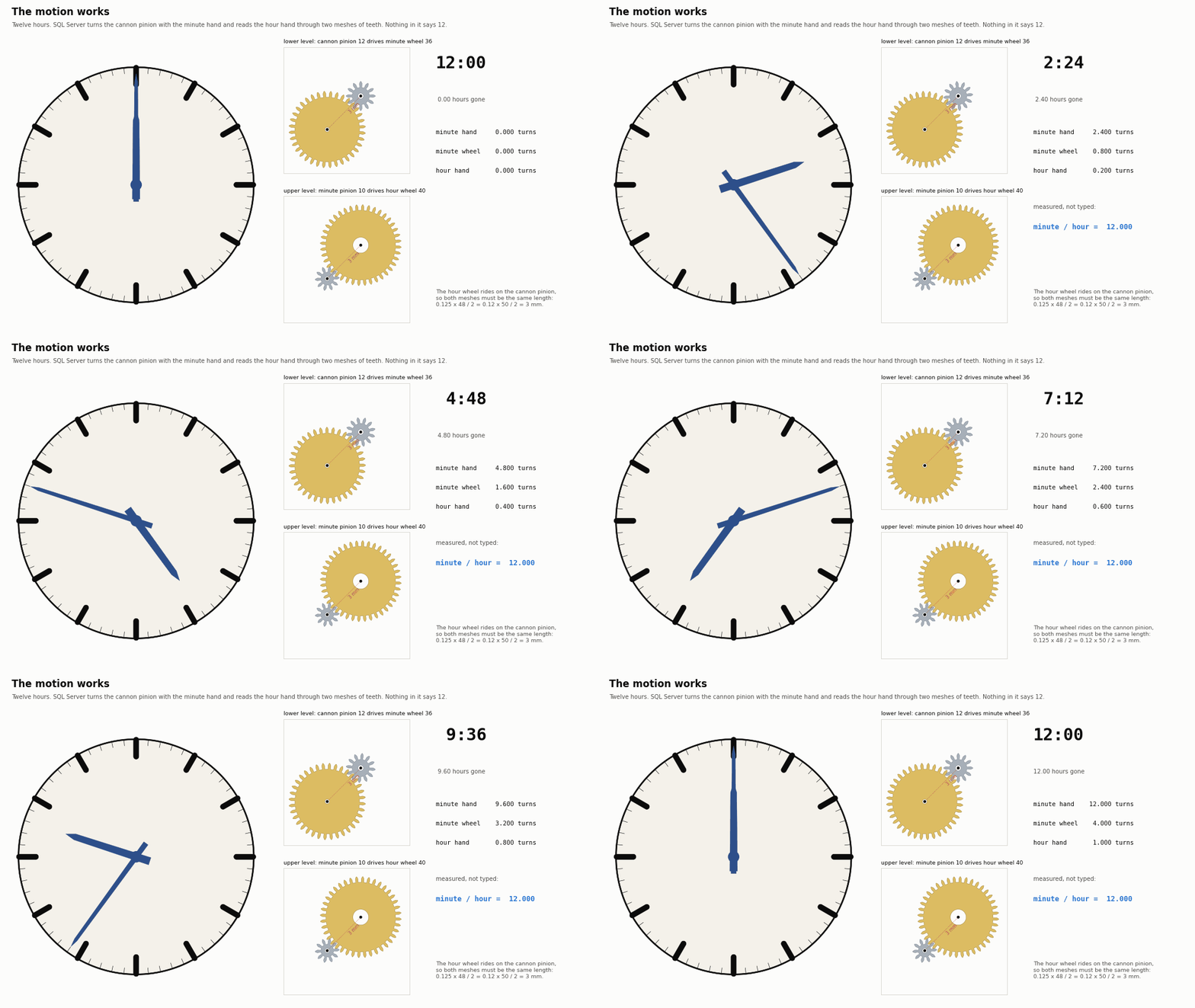 The motion works — this isn’t faking a watch, it is a watch
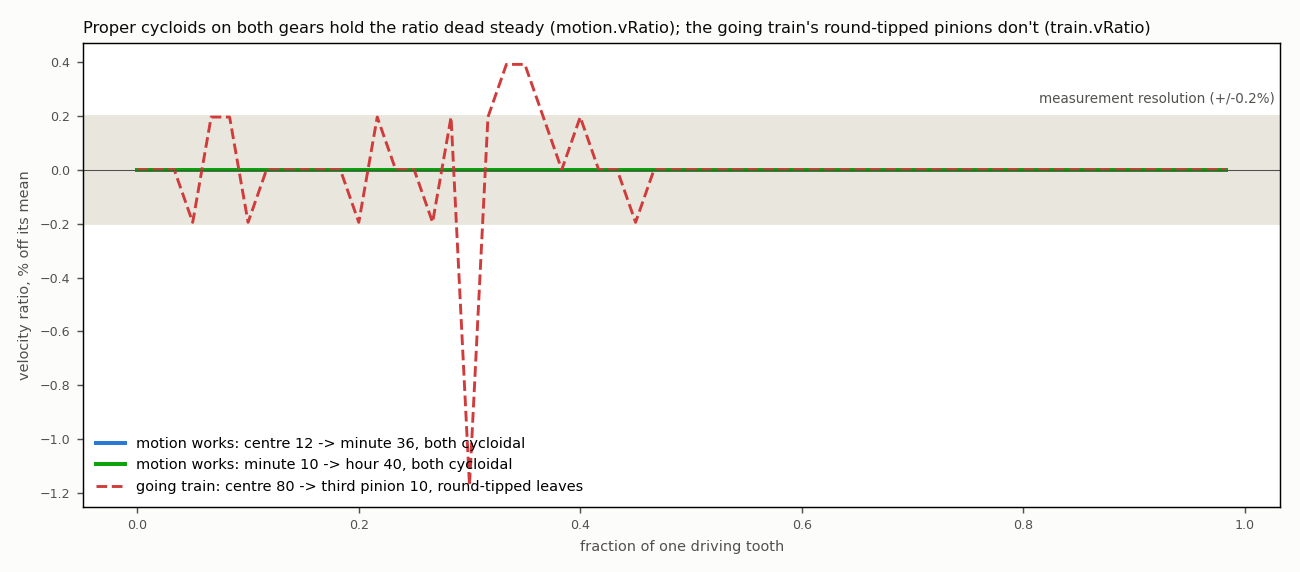 Episode 4: with proper teeth on both gears, the motion works don’t wobble at all.
SQL Server did everything I asked. It was just getting slower and slower, and I was writing more and more code to work around things that weren’t there.
There’s no way to turn a shape
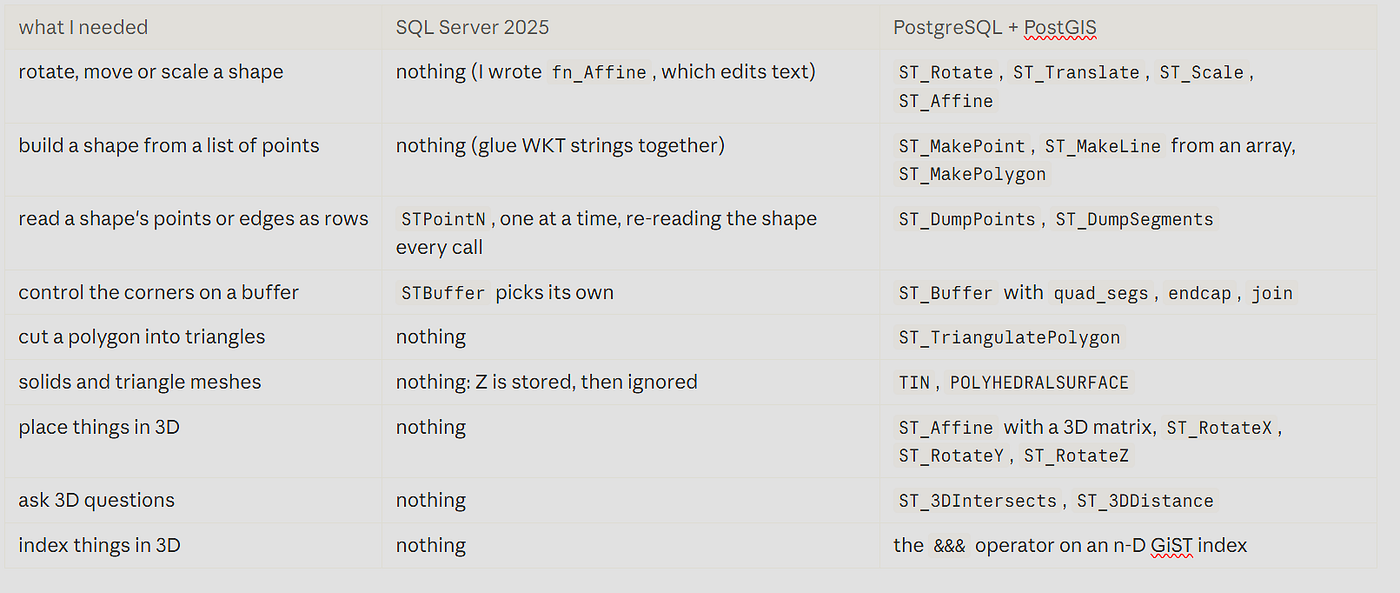
A watch is things going round. To turn a gear by 3° you need a rotate function. SQL Server’s geometry type doesn’t have one. No rotate, no move, no scale, no affine transform of any kind. So I wrote my own, dbo.fn_Affine, and it took three goes:
- Walk the points in a CTE. One animation took 3 minutes 16 seconds.
- Walk the points with
STPointN. 90 ms a wheel from a variable, but 600 ms a wheel from a table column, because every singleSTPointNcall re-reads the whole shape. - Edit the text. Turn the shape into WKT, split it at the commas, do the sums on every
x ypair, and glue it back together. 160 ms a wheel.
Version 3 is the one I used.
SELECT @out = STRING_AGG(CAST(CONCAT(p.Head,
                  LTRIM(STR(@a * c.X + @b * c.Y + @xoff, 24, 6)), ' ',
                  LTRIM(STR(@d * c.X + @e * c.Y + @yoff, 24, 6)), p.Tail) AS varchar(max)), ',')
              WITHIN GROUP (ORDER BY s.ordinal)
FROM STRING_SPLIT(@g.STAsText(), ',', 1) AS s
-- ... find where each number starts and stops, multiply, put it back
Yes, really. In SQL Server 2025, the fastest way I found to rotate a gear is to rewrite it as a string.
The escapement’s solver ran a whole sequence in 76 ms. Saving the moving shapes so Python could draw them took 20 seconds. The gear train was worse: 64 seconds of fn_Affine to store one animation.
There’s no “make a line from this list of points”. Every gear tooth, every spring, every spiral was built by glueing numbers into WKT strings and parsing them back.
This was the one that ended it. SQL Server geometry will store a Z value. Then every single method ignores it. There are no solids, no way to extrude a shape into a block, no triangles, no 3D “do these overlap?”, no 3D rotation. Nothing.
Bartosz’s watch spins in three dimensions and comes apart in layers, and SQL Server cannot calculate this. I had a choice. Stop at a flat watch, or switch to PostgreSQL and PostGIS.
Part 2: PostgreSQL and PostGIS, in 3D
I already had PostgreSQL 18 on my machine, with PostGIS 3.6, the spatial extension. Switching was straightforward. The first thing I did was rotate the same gear that didn’t work in SQL Server. ST_Rotate. One line of code and it was done.
Building the watch
The movement is 26 mm across and seen from the dial, with the crown at 3 o’clock. The barrel sits at 11, the fourth wheel at 6 (it carries the little second hand), and the escapement and balance work round to 9. Where the wheels are placed is calculated from the tooth counts on the gears. Two gears that mesh have to be exactly two radii apart.
Every part is made of pieces, and every piece is a flat shape given a thickness. That’s how real watch parts are made: cut out of flat metal. PostGIS turns each one into a proper closed 3D surface made of triangles, which it calls a TIN:
ST_TriangulatePolygoncuts the top and bottom faces into triangles.ST_DumpSegmentsmoves round the edge, and each edge becomes two triangles of wall.ST_Affineplaces the finished solid where it belongs in 3D.
That’s 34 parts, 107 pieces and 90,836 triangles, built in under a second. Every solid is watertight, and every one’s volume, worked out from its triangles, matches area × thickness to twelve decimal places.
Does anything share space?
The database checks every pair for overlaps. The first time it ran there were four small overlaps. A circle in SQL Server or PostgreSQL is not actually a circle; it’s a polygon with sides. When you use spatial features in those two databases, Pi is not quite Pi. The hole had 48 corners, the shaft had 32, and their corners poked through each other by a couple of thousandths of a millimetre. When I made the holes slightly bigger, just as a watchmaker would, it worked.
The order the watch is dismantled
Each round, every part that can slide straight out comes out.
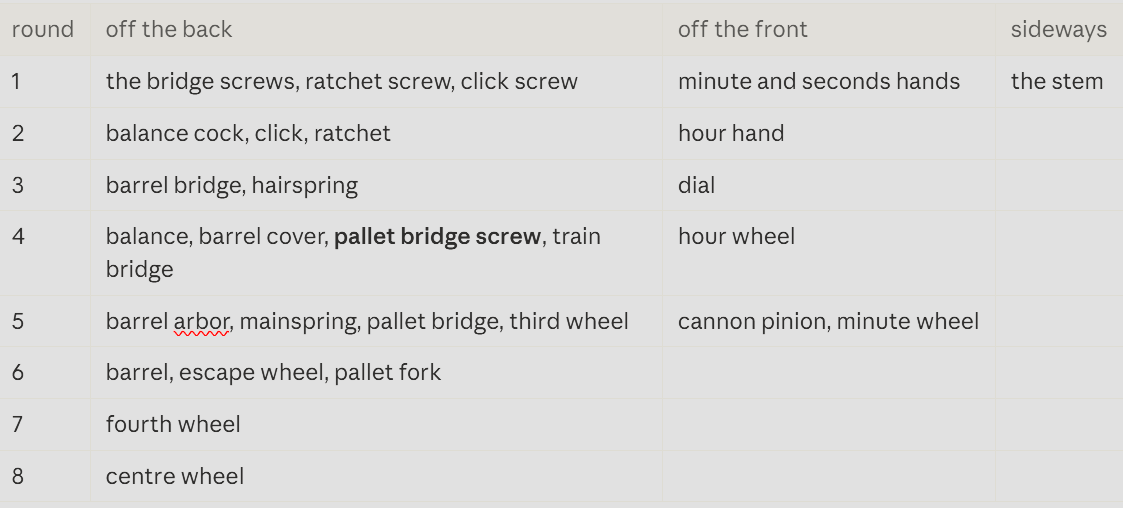 The order in which you need to dismantle
Those rounds then become the exploded view. The larger the round, the closer it is to the main plate. A small web page using three.js draws exactly the triangles PostGIS made, and you can spin it round and pull it apart with a slider, just like Bartosz’s.
Then I made it run
I ported Part 1’s escapement solver and gear maths to PostgreSQL, and pointed them at the 3D watch. The balance swings 2.5 times a second. The escapement lets the escape wheel step forward. Every other wheel follows it back through the gears to the barrel, and the motion works carry the hands round.
One minute is 300 beats and 30,901 frames, and PostgreSQL works out every one of them. After exactly one minute:
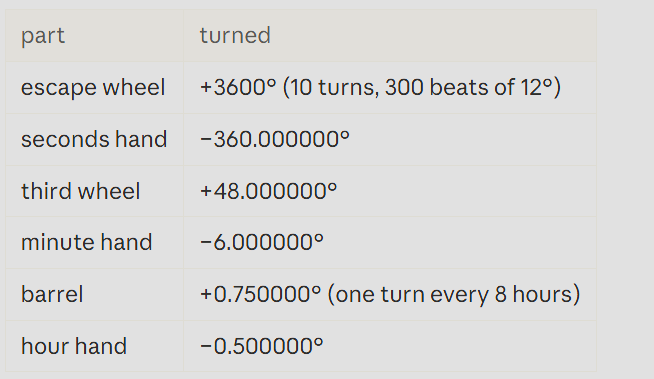
Once again, nothing in the SQL says 60. The second hand did one sweep because the teeth allowed it.
A hairspring doesn’t spin with the balance. Its inside end turns but its outside end is pinned, so the coils breathe in and out. The database builds 23 shapes of the spring, one for every 10° of swing, and the viewer picks the right one for each frame.
Fair’s fair: PostGIS wasn’t perfect either
Here’s where PostgreSQL made it tough.
- The 3D add-on was far too slow. PostGIS has an optional extension, SFCGAL, for true solids: volumes, 3D overlaps, solid booleans. It uses exact arithmetic. On my machine, the volume of one simple 160-corner prism took 20 seconds, and testing two gears for overlap didn’t finish in a minute. A watch has 107 pieces. So I didn’t use it at all. PostGIS’s own fast functions did everything instead. I left one process running and it actually completed 24 hours later.
- There’s no way to make a triangle from numbers. To build each solid’s TIN, I had to write it out as text,
TIN Z (((...))), and let PostGIS read it back. Yes, that’s the same trick asfn_Affine. The difference is I do it once per solid, not every time something moves. - Some of the 3D was really 2D. When two parts are both upright, “do these overlap in 3D?” splits into a flat overlap plus “are they at the same height?”. SQL Server could do that much. The genuinely 3D work is building the solids, placing them, triangulating them, and the sideways stem.
Even so, there’s no contest. Everything I needed was there, and it was quick.
Turning the same gear 100 times took SQL Server 21 seconds and PostGIS under 3 milliseconds. Here’s everything I could time to compare the two on the same machine.
Dear SQL Server spatial team
I love SQL Server. I’ve built everything from Doom to my own head in it. Its spatial types are solid and dependable, and for mapping and postcode lookups it is pretty good, but as far as I can tell, the geometry type hasn’t had a major new feature since SQL Server 2012. SQL Server 2025 brought vectors for AI, a native JSON type and regular expressions, all very welcome. Spatial got no new features.
 What the SQL Server team can improve on
So, my questions, as nicely as I can put them:
- Where are these features?
- Are any of them on a roadmap?
- If not, could they be?
Even just the first two rows would have turned my 21 seconds into milliseconds, and I could have just used SQL Server. The last five rows are the difference between drawing a watch and building one.
Credit where it’s due: PostgreSQL and PostGIS
A big thank you to the PostgreSQL and PostGIS teams. Many of the people behind them are volunteers, and they’ve quietly built the best spatial database there is, then given it away.
Wrapping up
I set out to build a watch without picking up a screwdriver, and I’ve ended up with one I can spin, pull apart and watch tick. Every shape, every position, every clash check, the order it comes apart in, and every one of the 30,901 frames came out of a database.
Next up, maybe the rest of the keyless works: the winding wheels and the crown wheel, whose teeth stick out sideways. That’s genuinely 3D, so more PostgreSQL.
All the code is on GitHub: the SQL for both databases, the Python mirror, the checks and the viewer.
Del Boy found his millions in a garage. I found a rotate function in PostgreSQL. I know which one I’d rather have, but I know which one I’ve actually got. Lovely jubbly. Give the story a few claps if you liked it.
Responses
Comment with a free GitHub account, or use the form below to send Trevor a private note.